
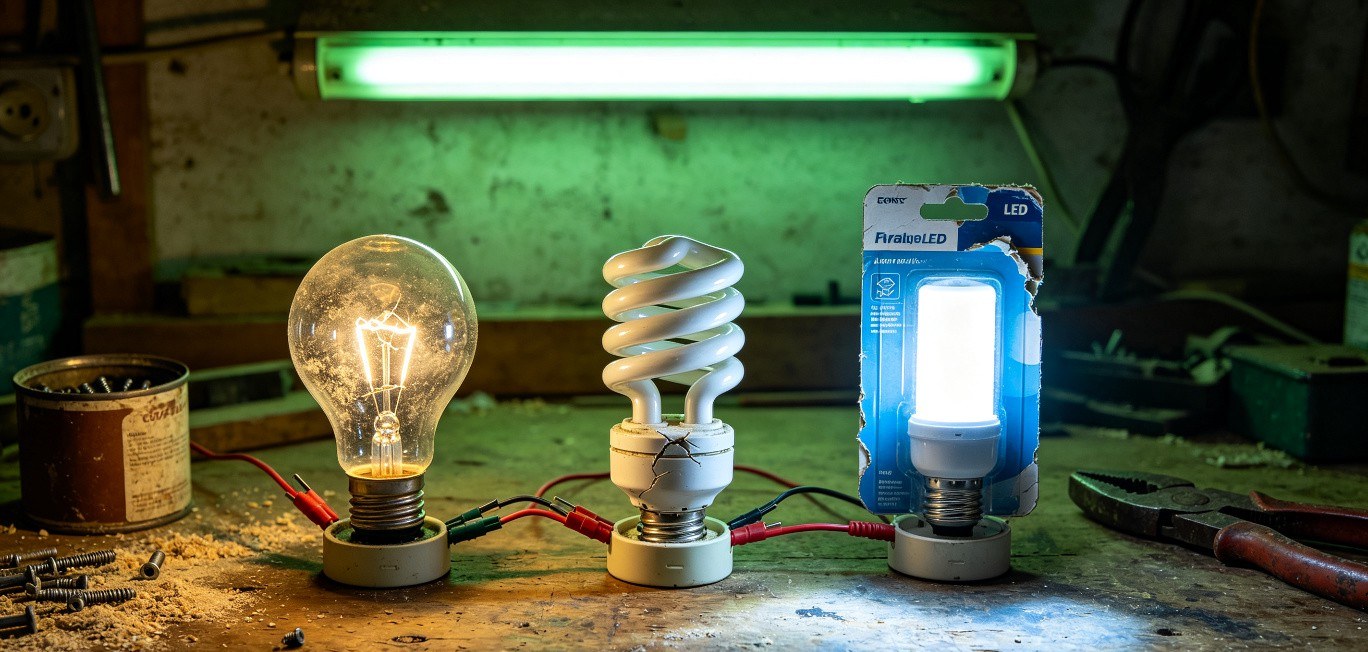
There is no fixed conversion between lumens and watts. Lumens describe light output; watts describe electrical power. You need the product’s efficacy in lumens per watt to connect them.
Use the efficacy of the product
Watts = lumens ÷ efficacy. At 100 lm/W, 800 lumens requires 8W; at 80 lm/W, it requires 10W. Use measured data for the complete lamp or luminaire rather than an LED-chip figure.
| Output | At 80 lm/W | At 100 lm/W | At 120 lm/W |
|---|---|---|---|
| 400 lm | 5W | 4W | 3.3W |
| 800 lm | 10W | 8W | 6.7W |
| 1,200 lm | 15W | 12W | 10W |
| 1,600 lm | 20W | 16W | 13.3W |
Calculated examples, rounded to one decimal place where needed. These are not ratings for a particular lamp.
Compare like-for-like specifications
Driver losses, optics, operating temperature, CCT, and color rendering affect efficacy. Two 10W products can have different output and distribution. Check the output at the setting you intend to use.
Read current model data
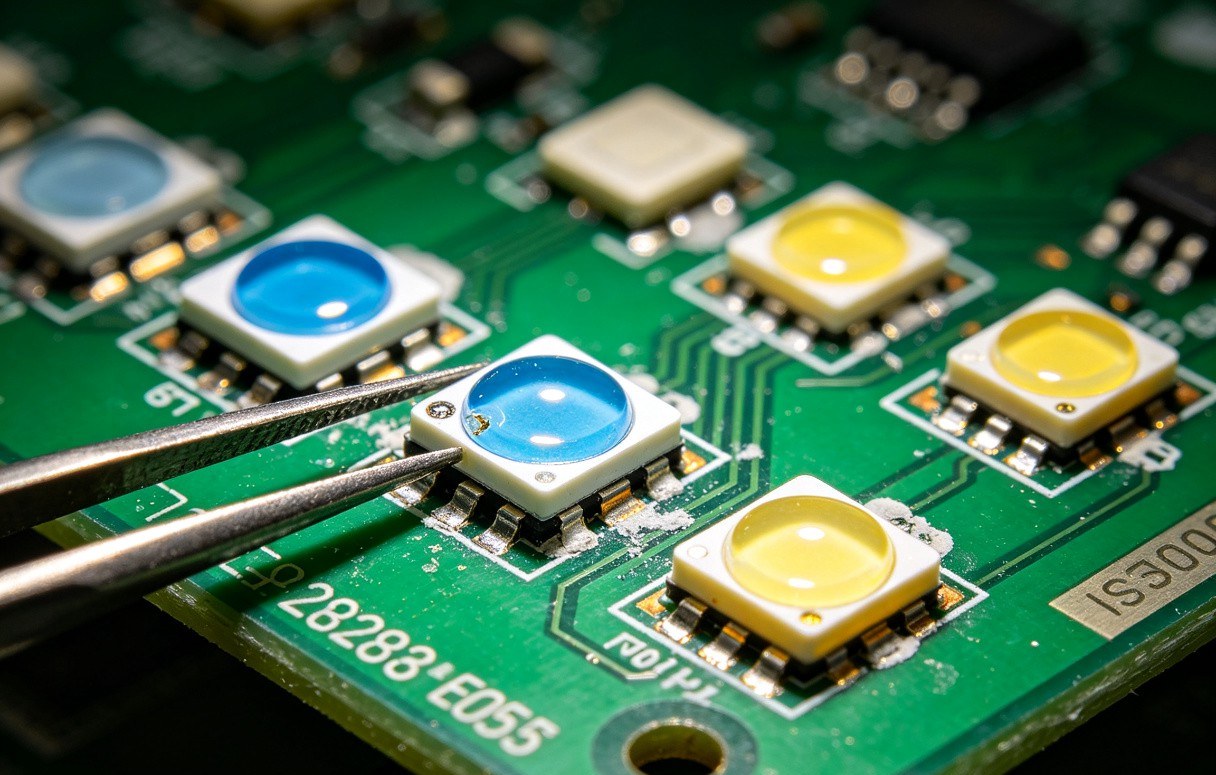
Older wattage-equivalent labels are useful for rough lamp replacement, but product performance changes. Compare the actual model datasheet and test conditions rather than relying on a technology-wide efficiency claim.
Check the light reaching the task
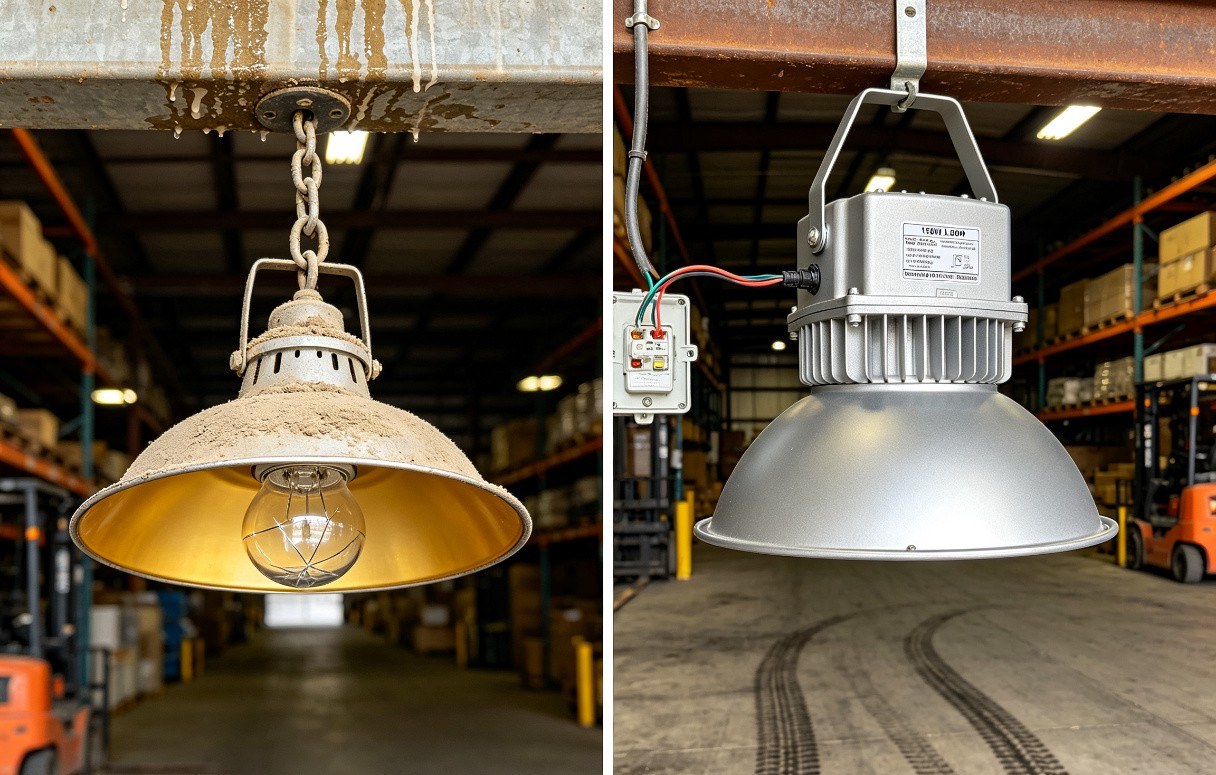
For a bulb replacement, compare lumens, shape, beam angle, base, enclosure rating, and dimming. For a complete fixture replacement, use photometry to check the layout. Equal emitted lumens do not guarantee equal light on the floor or desk.
Look for missing measurement conditions
Ask whether lumens refer to the LED package or finished product. Confirm input watts, CCT, Ra/R9, optic, and thermal conditions. Request the report supporting unusually high efficacy claims.
Calculate the energy difference
Annual kWh saved = (old watts − new watts) × quantity × annual hours ÷ 1,000. Multiply by the electricity rate. For fifty fixtures reduced from 60W to 20W at 4,380 hours a year, the saving is 8,760 kWh before controls or maintenance changes.
Frequently Asked Questions
How many watts is 1,000 lumens?
At 100 lm/W it is 10W. At a different efficacy, the power changes. Use the rated data for the product.
Is wattage-equivalent the actual power draw?
No. It is a comparison label. Use the stated input watts for energy calculations.
Is higher efficacy always better?
Compare the useful distribution, glare, color quality, controls, and maintenance needs as well as lm/W.