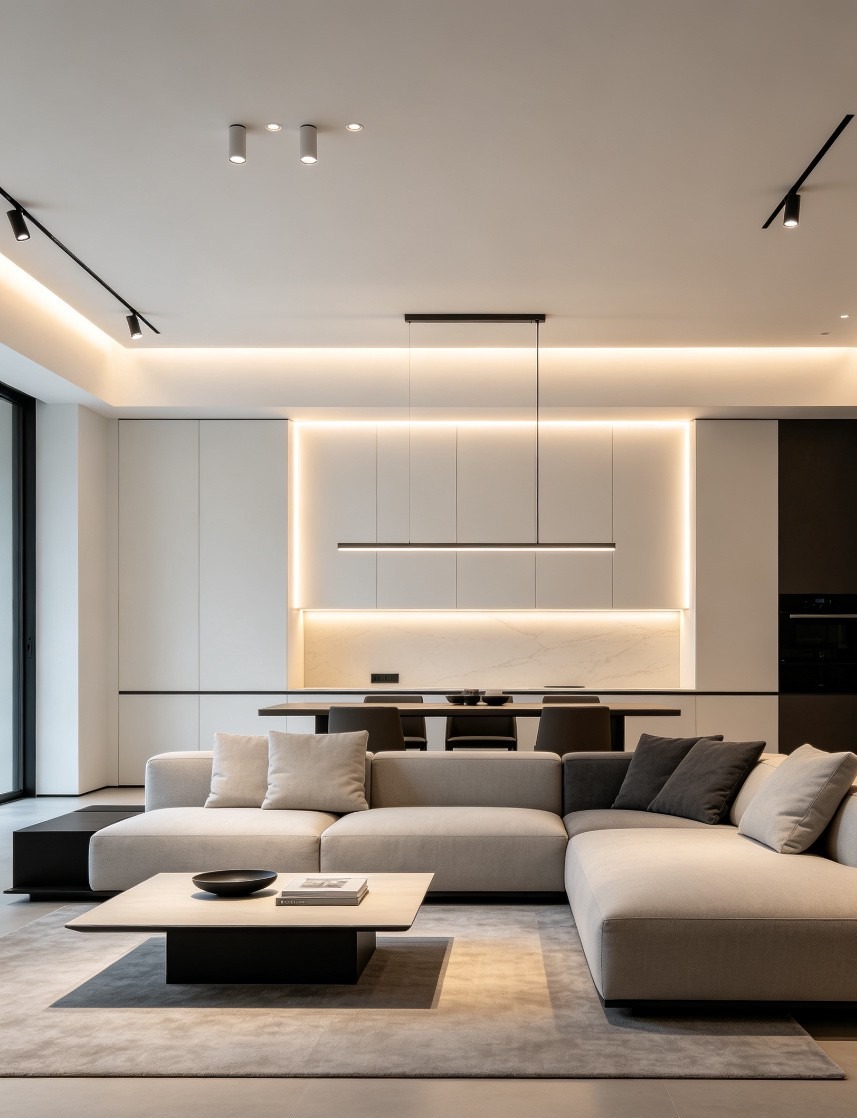
Compare five fixture styles by shape, material, finish, and the way they distribute light. Use the examples to narrow down designs, then check dimensions and output in the product catalog.
Updated July 2026
5 Styles Covered
IES-Referenced Specs
Era: 1950s-1960s | Origin: United States & Scandinavia
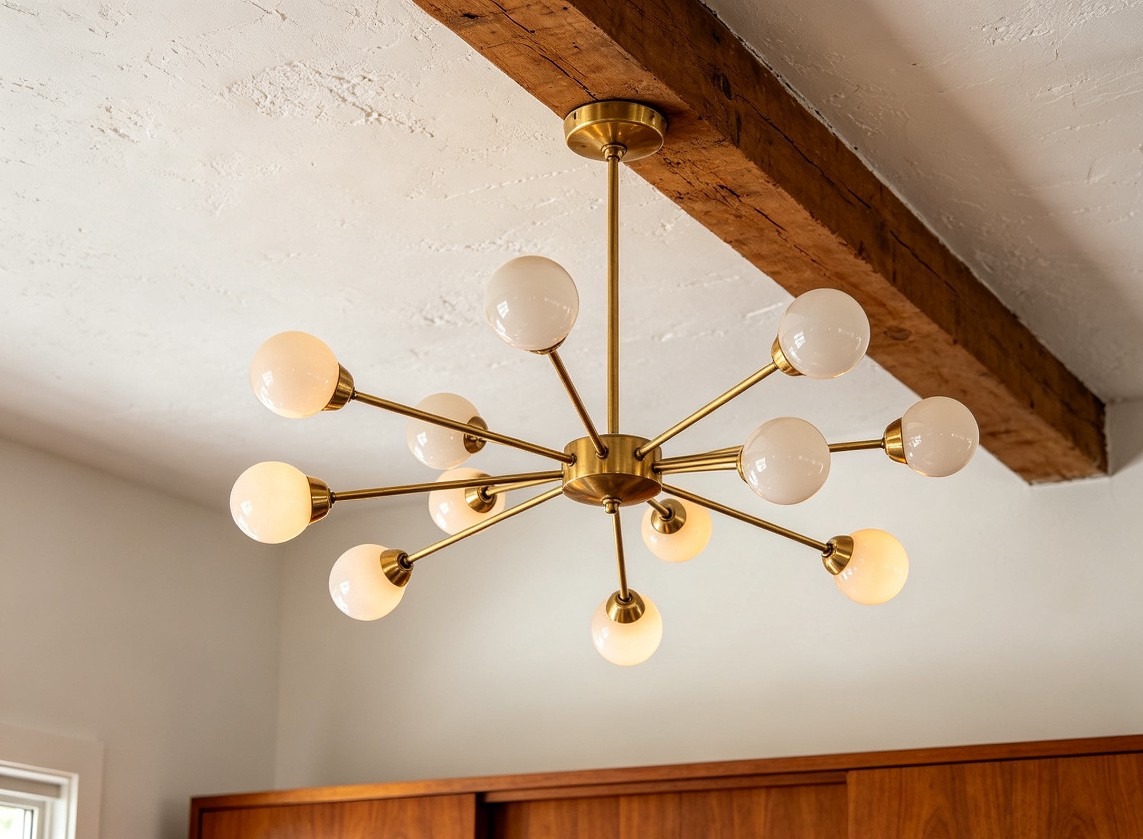
Mid-century fixtures often use rounded shades, slender arms, and geometric forms. Sputnik chandeliers and globe pendants are familiar examples. They can provide a focal point without the ornament of a traditional chandelier.
Look for brass, opal glass, painted metal, and wood details. Check how much light the shade sends upward and downward; two fixtures with a similar silhouette can light a room quite differently.
Key Characteristics
Design Elements
Sputnik and starburst chandelier forms with radiating arms
Geometric shapes: spheres, cones, cylinders, and asymmetric polygons
Brushed brass, antique bronze, and teak wood finishes
Exposed bulb aesthetics with visible filament LED options
Organic curves combined with strict linear elements
Matte opal or smoked glass diffusers for soft, even illumination
Light Quality Specs
CCT Range
2700K - 3000K
CRI Minimum
90+ (recommended 95+)
Warm white CCT preserves the era's intended ambiance. High CRI ensures brass and wood tones render accurately.
Ideal Room Placement
Living rooms, dining rooms, and entryways benefit most from mid-century fixtures. A Sputnik chandelier serves as a dramatic focal point above a dining table, while pendant lights work well in kitchen islands and reading nooks. For rooms with 8-foot or lower ceilings, flush-mount versions of classic designs maintain the aesthetic without crowding the space.
Check the shade and lamp together. Some decorative shapes expose the light source more directly than others, so view a sample from the positions where people will sit.
02
Fixture Style
Art Deco Lighting
Era: 1920s-1930s | Origin: France, spreading globally
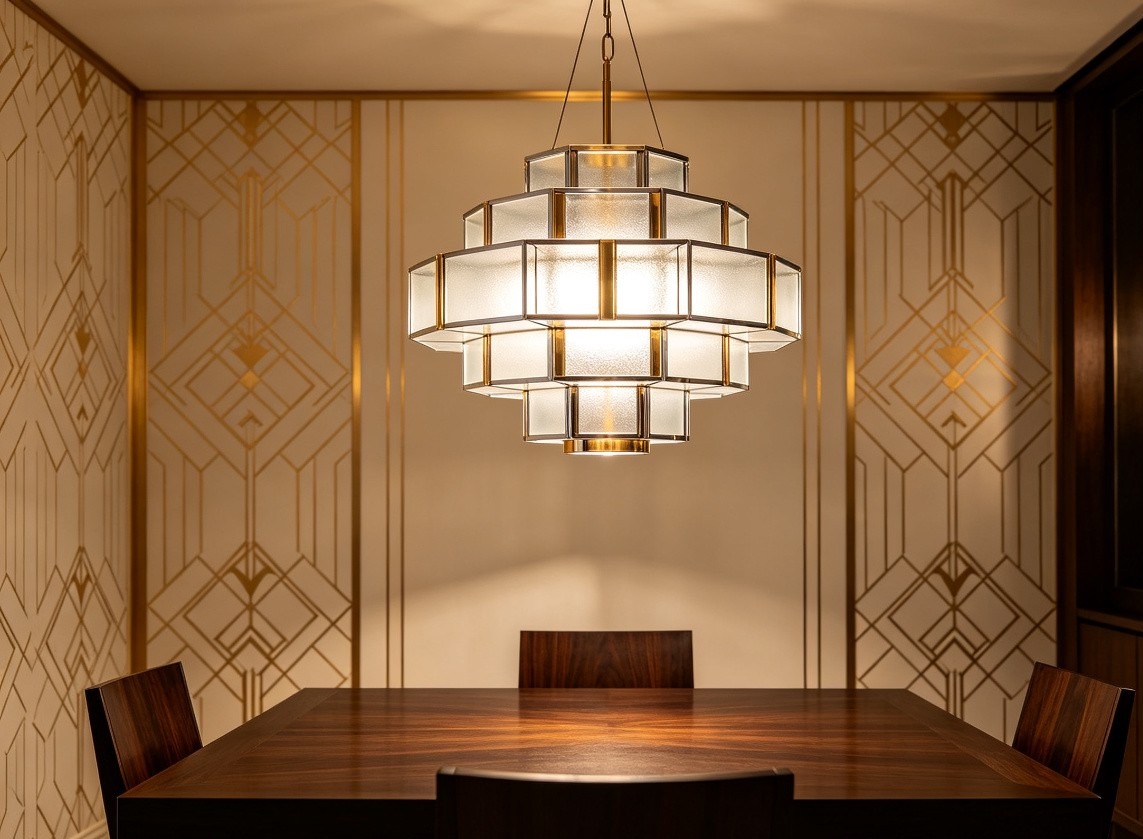
Art deco lighting uses repeated geometry, stepped forms, and strong contrasts between glass and metal. Ribbed glass, polished brass, and chrome are common details.
Choose the finish and scale alongside the surrounding furniture. Reflective metal and clear glass can expose bright lamps, so review the fixture from seated and standing positions.
Key Characteristics
Design Elements
Stepped geometric forms with symmetrical, tiered construction
Sunburst, chevron, and zigzag decorative patterns
Chrome, polished nickel, and gilded brass finishes
Frosted and etched glass shades for diffuse, even illumination
Streamlined, machine-age aesthetic with visible structural lines
Check color quality against the actual glass, metal, and room finishes. A decorative style does not set a minimum CRI.
Ideal Room Placement
Art deco fixtures excel in formal dining rooms, grand foyers, hotel lobbies, and dressing areas. A tiered art deco chandelier creates an immediate statement in double-height entryways. Wall sconces with frosted glass shades are ideal flanking bathroom mirrors, providing even facial illumination. Cocktail lounges and bars benefit from the style's inherent glamour.
Fixture Types
Tiered ChandelierSconce PairPendantTable LampFloor LampBathroom Bar
Specifications
Fixture Type
Typical Wattage
Lumen Range
CCT
CRI
IP Rating
Tiered Chandelier
60-120W (LED equiv.)
3,600-7,200 lm
2400K-2700K
95+
IP20
Wall Sconce (pair)
10-20W each (LED equiv.)
600-1,200 lm each
2700K
95+
IP44 (bathroom)
Pendant
20-40W (LED equiv.)
1,200-2,400 lm
2400K-2700K
95+
IP20
Table Lamp
12-25W (LED equiv.)
720-1,500 lm
2700K
95+
IP20
Pro Tip
Compare samples against the room’s metal and glass finishes. For bathroom sconces, check face illumination, glare, and the product’s suitability for the installation zone.
03
Fixture Style
Traditional Lighting
Era: Pre-1920s (classic European design) | Origin: Europe
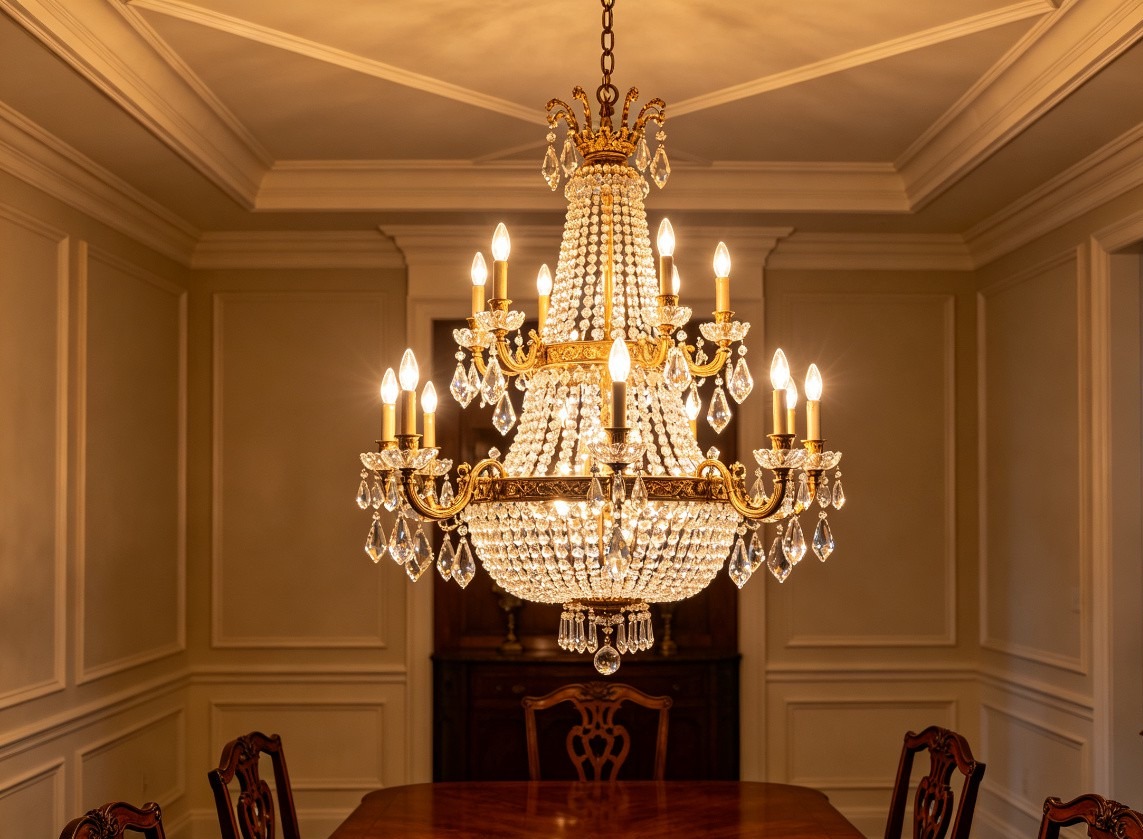
Traditional fixtures often use curved arms, candle-shaped lamps, fabric shades, or crystal drops. These details suit rooms where decorative trim and furniture already carry a similar level of detail.
Brass, glass, and crystal create different weights and reflections. Check the finished dimensions and the ease of cleaning or replacing lamps, particularly above stairs or tall foyers.
Key Characteristics
Design Elements
Crystal pendants and bobeches in hand-cut glass or leaded crystal
Candle-style bulb sockets with faux-drip wax sleeves
Ornate brass or bronze armatures with scrollwork and cast details
Multiple tiers and arms creating dramatic vertical silhouettes
Decorative chain and canopy with rosette or medallion mounts
Symmetrical, classically proportioned designs following golden ratio
Light Quality Specs
CCT Range
2200K - 2700K
CRI Minimum
95+ (critical for crystal)
A warm lamp can reinforce the candle-like appearance of a traditional fitting. View the crystal and surrounding finishes under a sample before choosing the lamp.
Ideal Room Placement
Traditional chandeliers are best suited for formal dining rooms, grand foyers with two-story ceilings, ballrooms, and classical living rooms. A crystal chandelier should hang 30-36 inches above a dining table surface. For entryways, the fixture's bottom should clear at least 7 feet from the floor. Avoid placing traditional fixtures in casual or minimalist spaces where they will feel visually incongruent.
Fixture Types
Crystal ChandelierCandle-Style SconceLantern PendantTable LampFloor LampFlush Mount
Sourcing crystal chandeliers or traditional sconces? Explore our traditional lighting catalog for wholesale chandeliers, candle-style sconces, and lantern pendants.
Specifications
Fixture Type
Typical Wattage
Lumen Range
CCT
CRI
IP Rating
Crystal Chandelier
80-200W (LED equiv.)
4,800-12,000 lm
2200K-2700K
95+
IP20
Candle Sconce
12-25W each (LED equiv.)
720-1,500 lm
2200K-2700K
95+
IP20
Lantern Pendant
30-60W (LED equiv.)
1,800-3,600 lm
2700K
95+
IP20
Flush Mount
25-45W (LED equiv.)
1,500-2,700 lm
2700K
95+
IP44 (bathroom)
Pro Tip
For a candle-style replacement, check lamp shape, base, output, CCT, enclosure suitability, and dimmer compatibility. Compare actual watts for the energy estimate.
04
Fixture Style
Transitional Light Fixtures
Era: 1990s-Present | Origin: United States
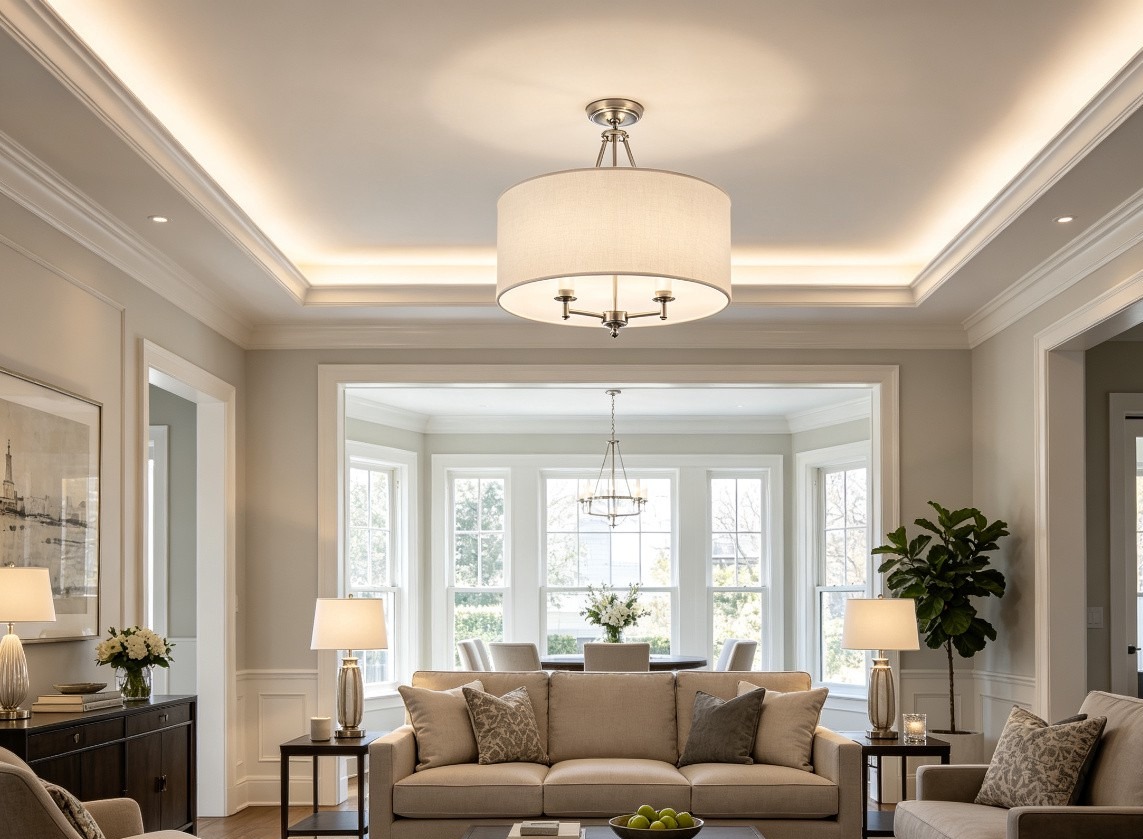
Transitional fixtures combine familiar shapes with simpler detailing. A curved chandelier frame with plain shades can work between traditional furniture and a more modern interior.
Look for restrained curves, simple fabric shades, and finishes that repeat elsewhere in the room. This approach is useful when adjoining spaces use different styles.
Key Characteristics
Design Elements
Simplified traditional silhouettes with reduced ornamentation
Clean lines combined with classic curves and familiar forms
Brushed nickel, oil-rubbed bronze, and warm metallic finishes
Fabric and linen shades for soft, diffused illumination
Blended material palettes: wood with metal, glass with fabric
Neutral color tones that integrate with varied interior schemes
Light Quality Specs
CCT Range
2700K - 3000K
CRI Minimum
90+ (recommended 95+)
Compare a warm-white sample with the fabric shade and nearby finishes, then check output on the surfaces below.
Ideal Room Placement
Use transitional fixtures where a repeated finish or shade shape can connect several rooms. Check each room’s scale rather than choosing one fixture size throughout.
Fabric shades can soften the view of a lamp, but the lining and diffuser affect light output. Check whether the shade sends enough light onto the table or working surface.
05
Fixture Style
Industrial / Vintage Lighting
Era: 2000s-Present (revival of early 1900s industrial) | Origin: United States
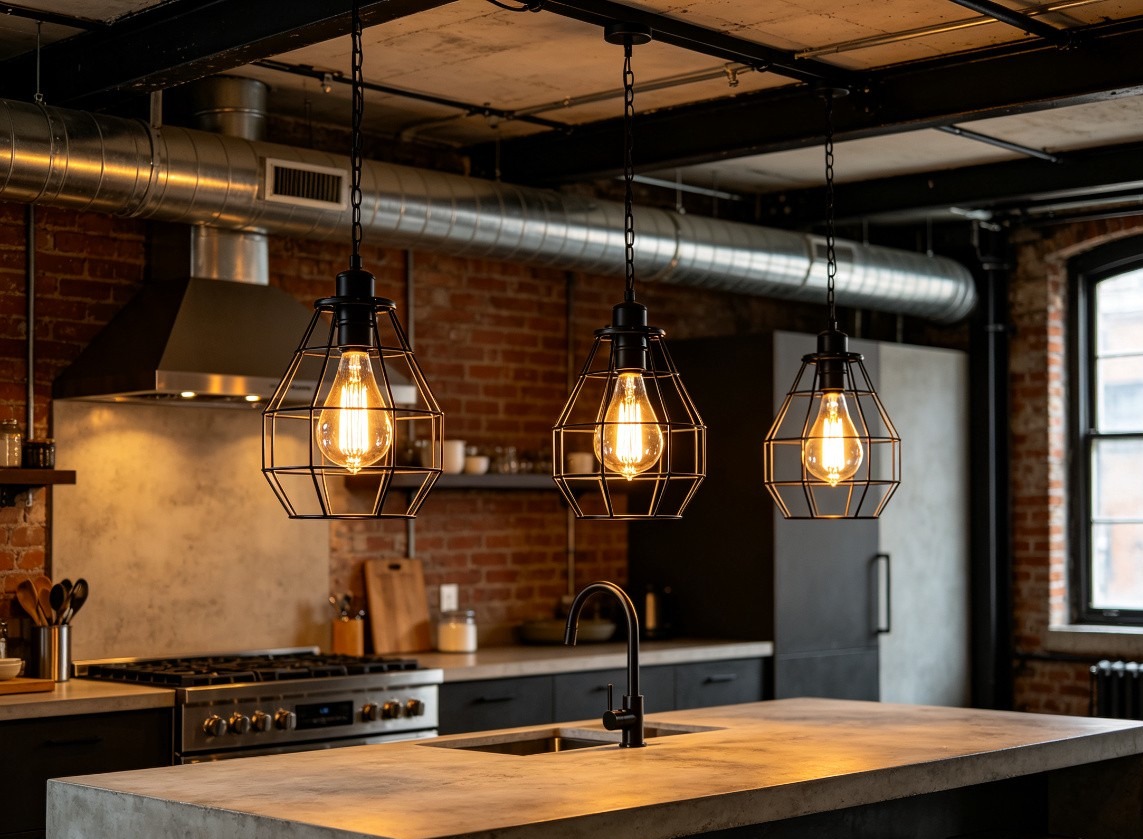
Industrial-style lighting borrows from workshop and factory fittings: metal shades, visible fasteners, cages, and simple suspension details.
Exposed lamps are often part of the design. Choose their brightness and position carefully so the decorative effect does not create glare at eye level.
Key Characteristics
Design Elements
Exposed Edison and filament LED bulbs as primary visual feature
Black metal, galvanized steel, and weathered brass finishes
Wire cages and guards protecting exposed bulbs
Pipe and conduit-inspired structural elements
Porcelain enamel shades in barn-light and warehouse forms
Visible hardware: rivets, thumbscrews, and threaded connectors
Light Quality Specs
CCT Range
2200K - 2700K
CRI Minimum
80+ (amber bulbs exempt)
Exposed filament-style lamps can provide a decorative effect. Check their brightness, glare, and color quality for the task.
Ideal Room Placement
Industrial fixtures thrive in kitchens, home offices, breweries, restaurants, and retail spaces. Pendant lights with metal shades work well over kitchen islands and bar tops, directing light downward for task illumination. Gooseneck barn lights are ideal for exterior entryways and garage doors. Avoid using exposed-bulb fixtures in areas requiring focused task lighting, as the bare bulbs create harsh glare.
Need industrial-grade fixtures for a loft or commercial space? Browse our industrial lighting lineup including cage pendants, barn lights, and gooseneck wall fixtures.
Specifications
Fixture Type
Typical Wattage
Lumen Range
CCT
CRI
IP Rating
Cage Pendant
8-15W (LED equiv.)
400-900 lm
2200K-2700K
80+
IP20
Barn / Gooseneck Light
15-25W (LED equiv.)
900-1,500 lm
2700K
80+
IP54 (outdoor)
Pipe Chandelier
30-60W (LED equiv.)
1,800-3,600 lm
2200K-2700K
80+
IP20
Warehouse Shade Pendant
15-30W (LED equiv.)
900-1,800 lm
2700K
80+
IP20
Pro Tip
For exposed lamps, compare lower-output bulbs and compatible dimming. Outdoor fittings need a rating and installation method suited to their actual exposure.
At a Glance
Style Comparison Matrix
Compare all five lighting styles side by side to quickly identify the best match for your project requirements.
Style
Era
Key Material
CCT Range
CRI
Best Room
Price Tier
Mid-Century Modern
1950s-1960s
Brass & Teak
2700K-3000K
90+
Living & Dining
$$ - $$$
Art Deco
1920s-1930s
Chrome & Frosted Glass
2400K-2700K
95+
Foyer & Formal Dining
$$$ - $$$$
Traditional
Pre-1920s
Crystal & Ornate Brass
2200K-2700K
95+
Grand Foyer & Ballroom
$$$ - $$$$
Transitional
1990s-Present
Brushed Nickel & Fabric
2700K-3000K
90+
All Rooms (Versatile)
$$ - $$$
Industrial / Vintage
2000s-Present
Black Metal & Edison Bulbs
2200K-2700K
80+
Kitchen & Loft
$ - $$
Price tiers are relative indicators: $ = budget, $$ = mid-range, $$$ = premium, $$$$ = luxury. Actual pricing varies by fixture size, material quality, and brand.
Start with the room, then check the fixture’s dimensions, light output, and appearance.
1
Identify Your Room's Architectural Era
Look at the room’s lines, finishes, and existing furniture. You can repeat a style or introduce a contrasting fixture; a shared material, proportion, or color can help it fit.
Photograph your room's architectural details (moldings, window styles, door profiles) and compare them against the era characteristics listed above before committing to a style.
2
Match Fixture Scale to Room Proportions
Fixture scale is critical to visual balance. A chandelier that is too small disappears in a large room, while an oversized fixture overwhelms a compact space. For dining room chandeliers, the diameter should measure one-half to two-thirds of the table width. For entryway fixtures in two-story foyers, add the room's length and width in feet to determine the ideal fixture diameter in inches. Ceiling height matters equally: rooms with 8-foot ceilings should use flush mounts or short pendants, while 10-foot or taller ceilings accommodate multi-tier chandeliers and longer pendant drops.
Use our Room Calculator to determine the exact lumen requirements and fixture quantity for your specific room dimensions.
3
Select CCT Based on Room Function
Compare CCT samples in the room. A warm lamp can suit a dining space, while a work surface may benefit from a different setting. There is no mandatory Kelvin value for a decorative style.
Test CCT options before committing. Purchase two bulbs at different CCT values and compare them in your actual space before buying fixtures for the entire room.
4
Verify CRI for Color-Critical Spaces
Check Ra and R9 when colors matter, then view samples of the actual finishes under the proposed lamp. Decorative style does not set a CRI requirement.
Consult our Lighting Glossary for detailed definitions of CCT, CRI, lumens, and other technical terms used in this guide.
Quick Reference
CCT & CRI Visual Guide
Understand how color temperature and color rendering index affect your lighting choices. Use this reference alongside the style guide above.
Color Temperature (CCT) Scale: 2200K to 5000K
2200KCandle / Ultra Warm
2400KVintage Warm
2700KWarm White
3000KSoft White
3500KNeutral
4000KCool White
5000KDaylight
Warmer lamps are often chosen for decorative interiors. Use the actual finishes, daylight, and activities to choose the CCT rather than assigning one value to each style.
CRI Levels & Application Recommendations
80+
Standard
Acceptable for industrial and vintage fixtures where ambiance matters more than color accuracy. Suitable for hallways, garages, and utility spaces. Not recommended for spaces with metallic finishes or color-critical tasks.
90+
High Quality
Recommended for mid-century modern and transitional fixtures. Provides good color rendering for living rooms, kitchens, and bedrooms. Renders wood tones and fabric colors with natural accuracy.
95+
Premium
Higher color-rendering scores can help with color-sensitive tasks. They are not a requirement simply because a fixture uses crystal, chrome, or a particular decorative style.
Combining styles can work when a finish, shape, or proportion connects them. Compare the fittings together rather than choosing each one in isolation.
Do This InsteadChoose one primary style and one complementary accent. For example, pair transitional fixtures with a single industrial statement piece for deliberate, controlled contrast.
02
Ignoring Fixture Scale Relative to Room Size
A small pendant in a large dining room looks lost, while an oversized chandelier in a compact bedroom feels oppressive. Scale mismatches are the most common lighting design error.
Do This InsteadCalculate fixture diameter using the room dimension formula (length + width in feet = diameter in inches). For dining tables, keep the fixture at 50-66% of table width.
03
Wrong CCT for the Design Era
A lamp can change how a shade or finish looks. Compare the intended CCT in the actual fixture before ordering the full quantity.
Do This InsteadMatch CCT to the fixture's design era: traditional and industrial styles use 2200K-2700K, mid-century and transitional use 2700K-3000K. Never exceed 3000K for decorative fixtures.
04
Overlooking CRI in Color-Critical Rooms
Check skin tones and material samples under the proposed lamp. Ra and R9 are useful comparison points, but neither replaces viewing the light in context.
Do This InsteadAlways specify CRI 95+ for bathrooms, dining rooms, and any space with crystal, chrome, or brass fixtures. Check the CRI value on bulb packaging before purchasing.
05
Insufficient Lumen Output for Ambient Lighting
Check useful light on the working surfaces as well as the fixture’s appearance. A decorative shade may need separate task lighting nearby.
Do This InsteadCalculate required lumens using IES recommended practice (10-20 lux/sqm for ambient). Supplement decorative fixtures with recessed lighting or additional layers if lumen output is insufficient.
See the lighting design guide for lighting layers, light-level estimates, and layout checks.