
LED Beam Angle Calculator
See how wide a beam spreads at the surface, or work back from the width you need. Change the angle and distance to update the diagram.
Calculate Your Beam Spread
Two modes: find the beam diameter from an angle, or find the right angle for your target area.
Beam Spread Visualization
Browse the range on Tonghua Lighting, our main manufacturer website.
Beam diameter depends on the full beam angle and the perpendicular distance from the fixture to the lit surface. Use the distance to the worktop or display when that is your target, rather than the full ceiling height.
Calculation method
- Diameter = 2 × distance × tan(beam angle ÷ 2)
- Circular area = π × (diameter ÷ 2)²
- Required angle = 2 × arctan(diameter ÷ (2 × distance))
Worked example
A 60° beam at 8 ft gives a diameter of 9.24 ft and a circular area of 67.02 sq ft. The calculator displays 9.2 ft and 67.0 sq ft. A 6 ft target at 8 ft needs about 41°.
Further reading
- U.S. Department of Energy: LED basics
Background on fixture efficacy, light quality and lifetime. The planning assumptions shown here are specific to this tool.
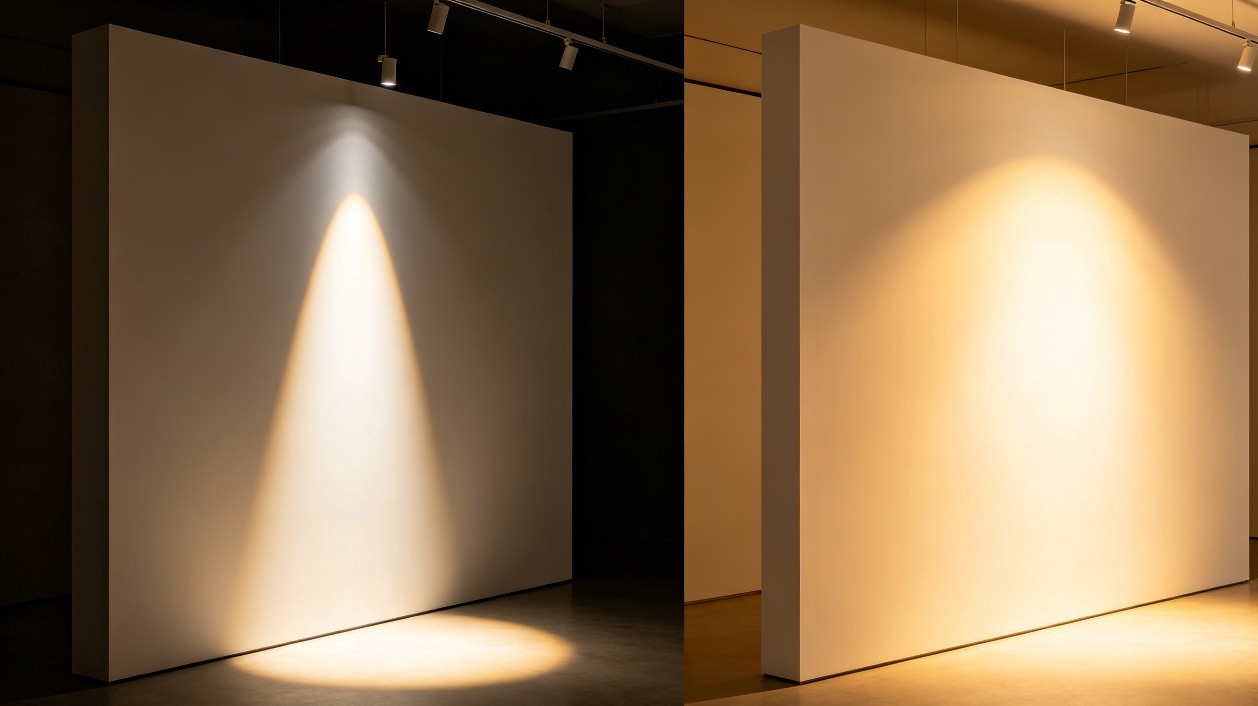
Spot vs Flood: What 60° Really Looks Like
Compare three beam angles at the same mounting distance.
Which Beam Angle for Which Space?
Examples of how beam angle affects coverage in different spaces.
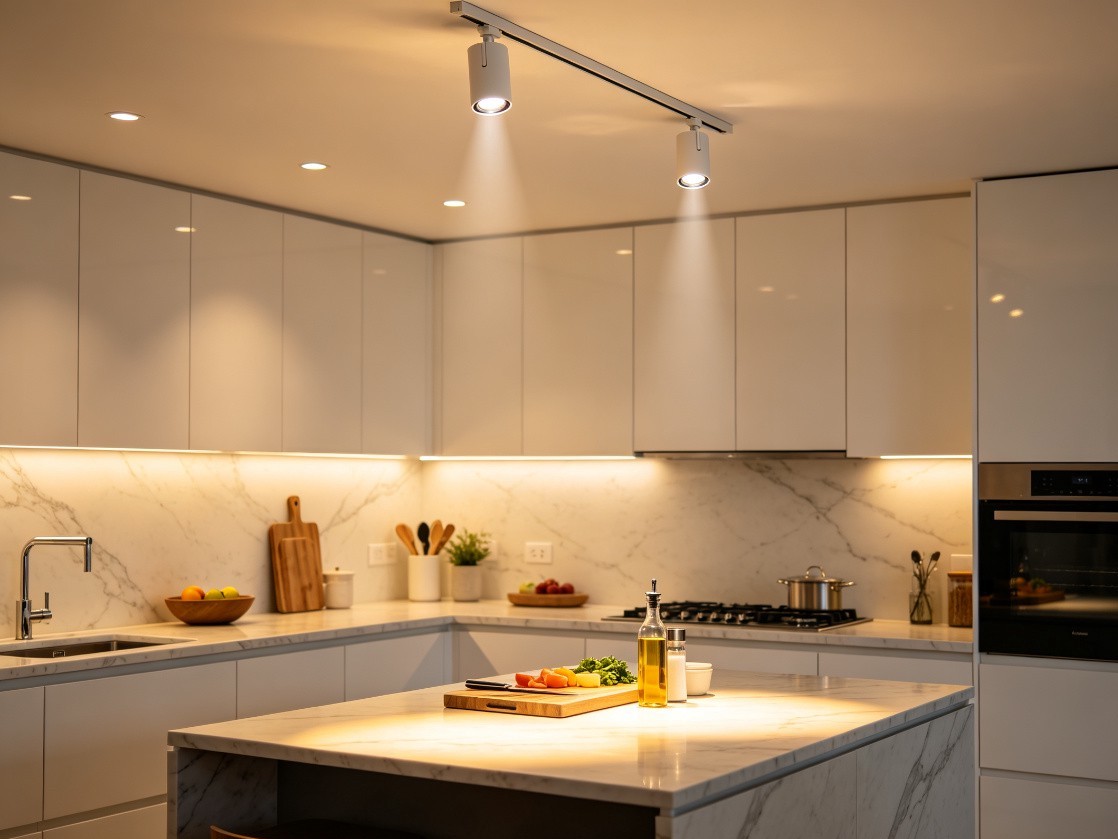
Kitchen: Two Angles, Not One
Most kitchens end up with the same 60° recessed can everywhere. That's why your countertops look the same as your walkways. The fix: swap the two lights directly above your prep area for 25-40° narrow floods. You get focused pools where you actually chop and read recipes, while the ambient cans handle everything else.
The contrast makes the kitchen feel bigger and more layered. For pendant lights over an island, 30-40° beams create defined light pools on the countertop without spilling too much into adjacent areas. Browse pendant fixtures for kitchen islands.
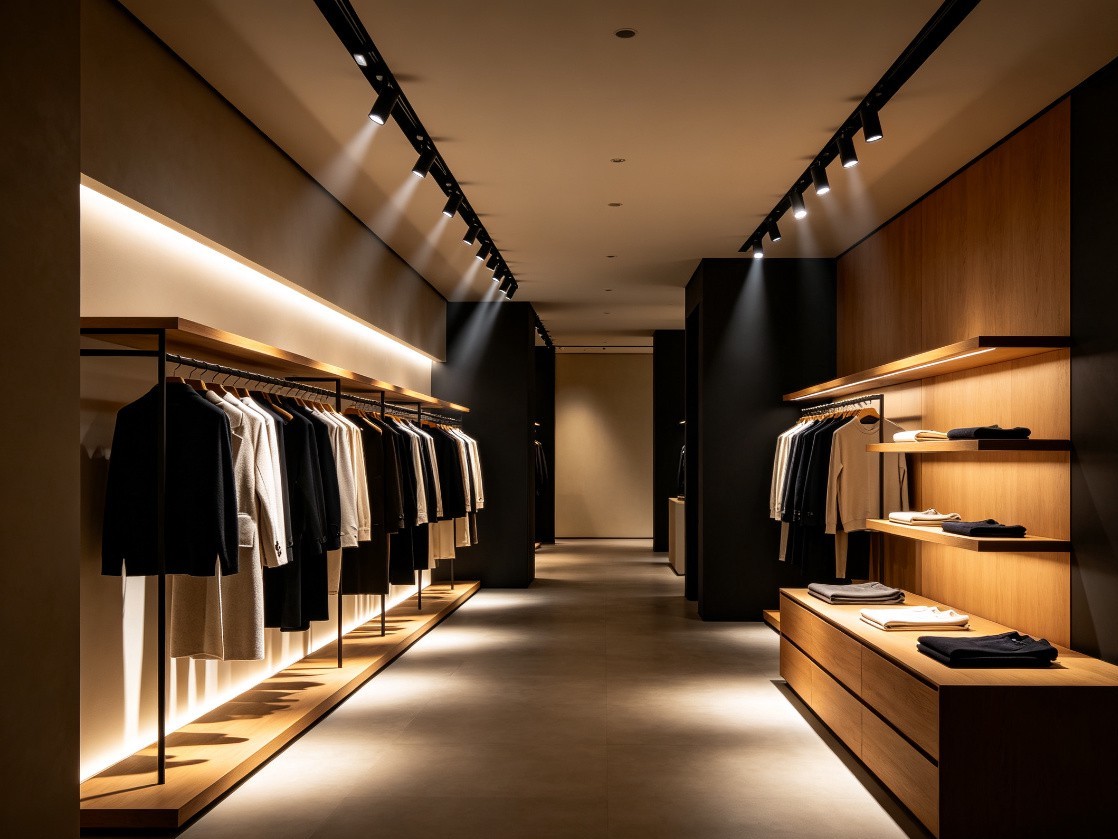
Retail: Direct Light onto Displays
Narrow beams can highlight display tables while wider beams light circulation areas. Compare the contrast with surrounding surfaces, then check glare from customers’ viewing positions.
A narrow spot may suit a small object; a wider beam may suit a clothing rail. Mounting height and aiming angle matter as much as the nominal beam angle. Test a sample on the actual display.
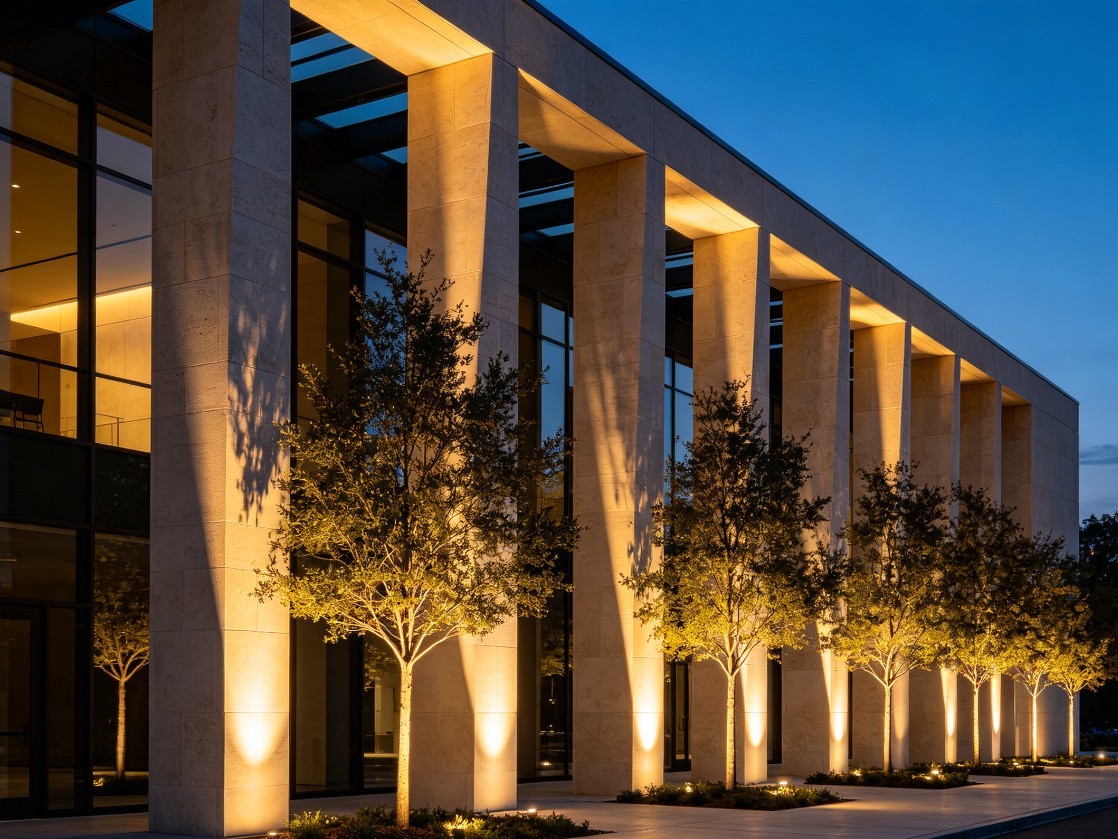
Outdoors: Drama vs Safety
Outdoor lighting uses beam angles to create two completely different effects. Narrow 15-25° beams uplight trees and architectural columns for drama. The tight beam pushes light high without spilling sideways. Wider 60-90° beams handle pathway and patio lighting where safety matters more than atmosphere.
For facade grazing on textured stone or brick, 25-40° beams placed 6-12 inches from the wall create shadows that reveal texture. For large area illumination like driveways, 90-120° floodlights cover the most ground. Always verify IP65 or higher rating for outdoor fixtures.
Hallways: Avoid the Spotlight Effect
Hallways need even, glare-free lighting, not a runway of bright spots. Use 40-60° beam angles for recessed downlights spaced 4-6 feet apart. The wider beams overlap to eliminate dark gaps between fixtures while keeping brightness consistent.
Visible circles and dark gaps can indicate that the spacing is too wide for the selected optics. Try a wider distribution or closer spacing, then check illuminance and glare in a layout.
Wall sconces with 120° wide flood beams supplement downlights for ambient wall illumination. For more on spacing calculations, see our Lighting Layout Calculator.
Three Ways to Get It Wrong
Check coverage, overlap, and glare before choosing the optics.
Too Narrow
Narrow spots concentrate light on a small area. Used alone for general lighting, they can leave dark gaps between fixtures.
Just Right
Overlap adjacent beams where even illumination is needed. Add separate task or accent lighting where the general layout does not provide enough light.
Too Wide
A wide beam spreads light over more area and may spill onto surfaces you do not intend to light. Check shielding and glare, particularly at low mounting heights.
Beam Angle Questions, Answered
What is a beam angle in LED lighting?
Beam angle is the angle at which light spreads from a fixture, measured between the two directions where intensity drops to 50% of maximum. A narrow beam angle (15-30°) creates a concentrated spot, while a wide beam angle (60-120°) produces a broad flood. It directly determines how large the light pool will be at any given distance.
How do I calculate beam spread?
Beam diameter = 2 × height × tan(angle/2). A 60° beam at 8 feet gives a 9.2-foot diameter pool. The light pool area is π × (diameter/2)². Our calculator does both instantly, and the reverse calculator finds the angle if you know your target pool size.
What beam angle for a kitchen?
Start with wider beams for general lighting and more focused light over worktops. Check the fixture position so the person working does not cast a shadow on the counter.
Spot vs flood: what's the difference?
Spots (10-30°) produce a tight, concentrated circle, ideal for highlighting artwork, products, or architectural features. Floods (40-120°) spread light broadly for general illumination. Narrow flood (40-60°) bridges the gap. Use spots to emphasize, floods to illuminate.
How does ceiling height affect beam spread?
Beam diameter grows linearly with distance. Double the height, double the diameter, but illuminance drops to one-quarter (inverse square law). A 60° beam gives 4.6 ft at 4 feet, but 9.2 ft at 8 feet. Higher ceilings call for narrower angles to maintain usable brightness at the surface.
What beam angle for wall washing?
Wall washing depends on the fixture optics, setback, spacing and wall height. Use the manufacturer’s wall-wash layout or a photometric model to check uniformity; beam angle alone cannot establish even coverage. Grazing places light close to a textured wall to emphasize shadows.