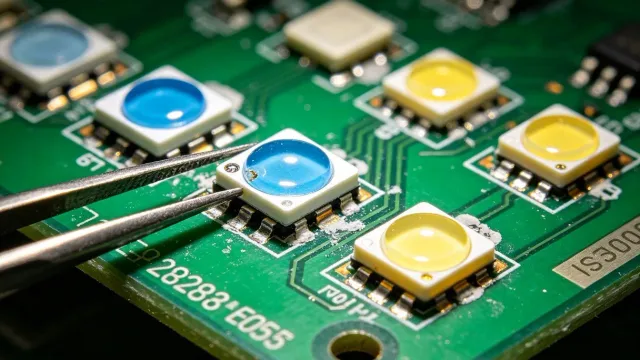
Lumens and color rendering describe different qualities of light. Compare them separately when choosing fixtures for offices, homes, retail, or hospitality projects.
Lumens describe a fixture's total visible light output. CRI (Ra) estimates how colors appear under that light. They are separate ratings; check R9 separately when saturated reds matter.
What lumens measure
Lumens (lm) measure total visible light output, weighted by the human eye's photopic response. Lux measures illuminance on a surface: one lux equals one lumen per square meter. A fixture's lumen rating alone does not tell you the illuminance at a desk or the uniformity across a room.
What CRI measures
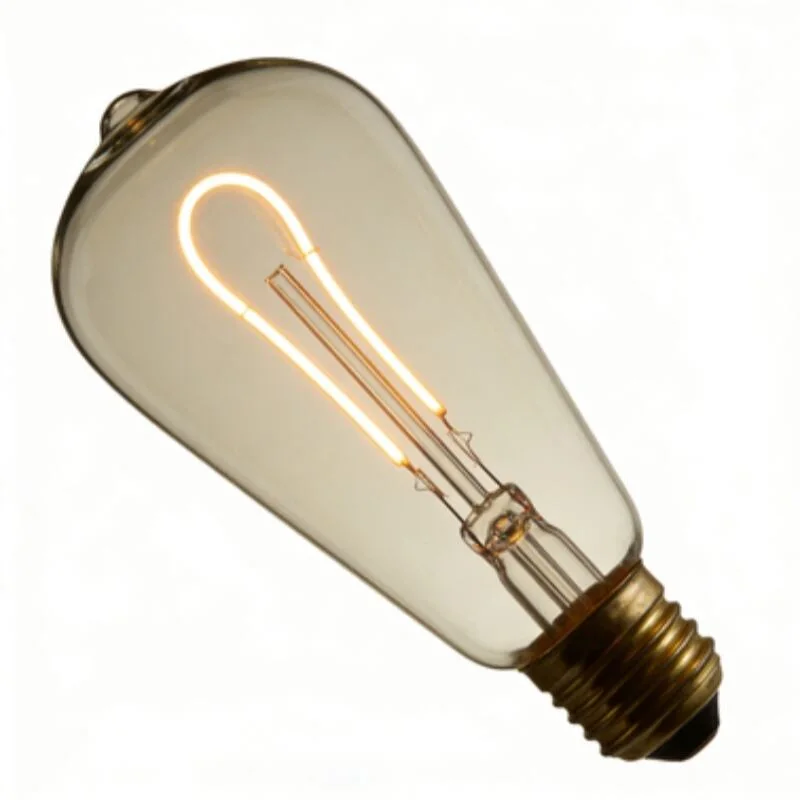
The general color rendering index, Ra, compares the appearance of eight color samples under a source against a reference illuminant. A higher Ra generally indicates closer agreement for those samples. Ra does not measure brightness, and it does not include the saturated red sample R9.
Why R9 matters
Request R9 separately where red objects, skin tones, food, textiles, or artwork matter. Two lamps with the same Ra may have different R9 values. Color temperature also describes a separate property: the warm or cool appearance of the light itself.
Compare complete fixture specifications
- Delivered lumens and input watts, measured for the complete luminaire.
- Ra and R9 at the specified color temperature.
- Color consistency, dimming compatibility, and flicker performance.
- Photometric distribution and an IES or LDT file for layout calculations.
- Operating conditions, lumen maintenance data, and warranty terms.
A simple planning example
A 20 m² work area with a target average illuminance of 300 lux needs 6,000 lumens reaching that area. With an assumed utilization factor of 0.6 and maintenance factor of 0.8, the initial luminaire output estimate is 6,000 ÷ (0.6 × 0.8) = 12,500 lumens. These factors are illustrative, and the target depends on the task and local requirements. CRI must still be specified separately.
Use a layout to confirm the result
Our room calculator provides an initial area estimate. Confirm final fixture count, glare, uniformity, and working-plane illuminance using the actual luminaire photometry and room surfaces. See the lighting glossary for definitions, then compare lumens and watts or review the LED efficacy guide for related specification details.